
News
Sandpapergate: Bancroft’s Revelations Put Australian Cricket’s Culture of Accountability on Trial
Brisbane, 18 November 2026:
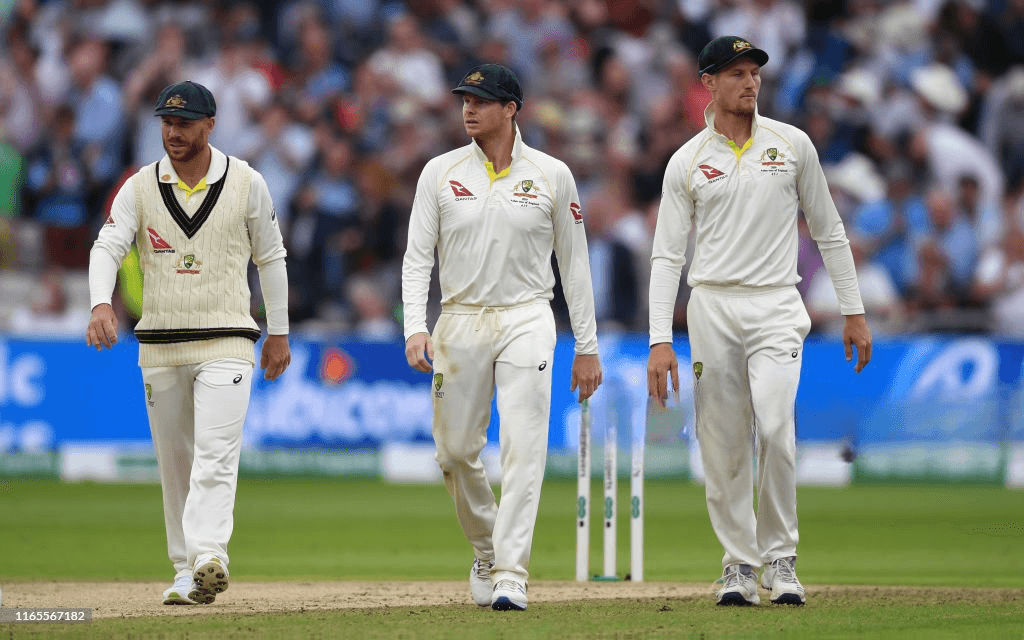
Cameron Bancroft’s explosive account of the 2018 Sandpapergate scandal has reopened a question Australian cricket believed it had settled: was Cape Town the misconduct of three individuals or the consequence of a team culture in which ethical boundaries had become dangerously blurred?
In his lengthy account published by The West Australian, Bancroft claims knowledge of sandpaper use extended across the Australian dressing room. More significantly, he alleges the practice began during the preceding Port Elizabeth Test, with conversations involving players and coaching staff.
These allegations remain contested, but their implications extend beyond identifying who knew what.
Bancroft’s admission that he withheld information during Cricket Australia’s original investigation raises concerns about the completeness of the process that established the official narrative. If his account withstands scrutiny, the distinction between individual wrongdoing and collective responsibility becomes impossible to ignore.
The conflicting positions are striking. Pat Cummins has emphatically rejected suggestions that the bowlers knew of the scheme, describing Usman Khawaja’s earlier allegations as “utter nonsense”. Cummins, Mitchell Starc, Josh Hazlewood and Nathan Lyon had also publicly denied prior knowledge in 2021.
Meanwhile, Khawaja’s autobiography Sabr and David Warner’s subsequent support for his former teammate have exposed divisions over how responsibility was distributed.
Cricket Australia’s response has been cautious. While acknowledging Bancroft’s account, the governing body says it will finalise terms of reference for a forum allowing individuals to present their versions of events.
Yet a forum designed to hear competing recollections is not necessarily equivalent to an independent investigation capable of testing evidence and establishing findings.
That distinction matters.
Perhaps the most revealing dimension of Bancroft’s account is his description of a young cricketer seeking acceptance within an established hierarchy. It raises an uncomfortable question about leadership: how can an organisation encourage ethical decision-making when perceived loyalty to teammates outweighs individual judgment?
Bancroft also questions whether his prolonged exclusion from international cricket reflects sporting considerations or the lingering consequences of the scandal. That suspicion deserves examination, but cannot independently establish unfair selection.
Australian cricket now faces a credibility test extending beyond the original offence. Competing testimonies should be assessed fairly, without presuming guilt or dismissing uncomfortable evidence.
Eight years later, the challenge is no longer simply explaining what happened to the ball. It is establishing whether Australian cricket’s accountability reached everyone it should have.
Topics
- Selection
- Grade cricket
- Player welfare
- Debut
- Coaching
- Pitch conditions
- Pathways
- Governance
- Fast bowling

Cricket Australia announces independent forum to address lingering fallout from 2018 Sandpapergate scandal

ICC confirms major men’s cricket tournament schedule until 2035, Australia to host 2028 T20 World Cup

Patterson-White preferred over Bashir and Leach for England’s tour of South Africa
Read next
- NewsRoot to lead England in South Africa Tests as Patterson-White earns maiden call-up3 min read
- NewsBangladesh name 16-member Test squad for South Africa series as WTC race intensifies1 min read
- NewsMike Hussey handed expanded Australia coaching role ahead of Ashes, World Cup and LA Olympics2 min read
- NewsMustafizur Rahman set for BBL Debut as Melbourne Renegades bolster pace attack2 min read